Since 1955, World Press Photo has connected the world to the stories that matter. The non-profit organization remains committed to press freedom and the power of visual journalism by providing platforms that present accurate, diverse, and trustworthy images.
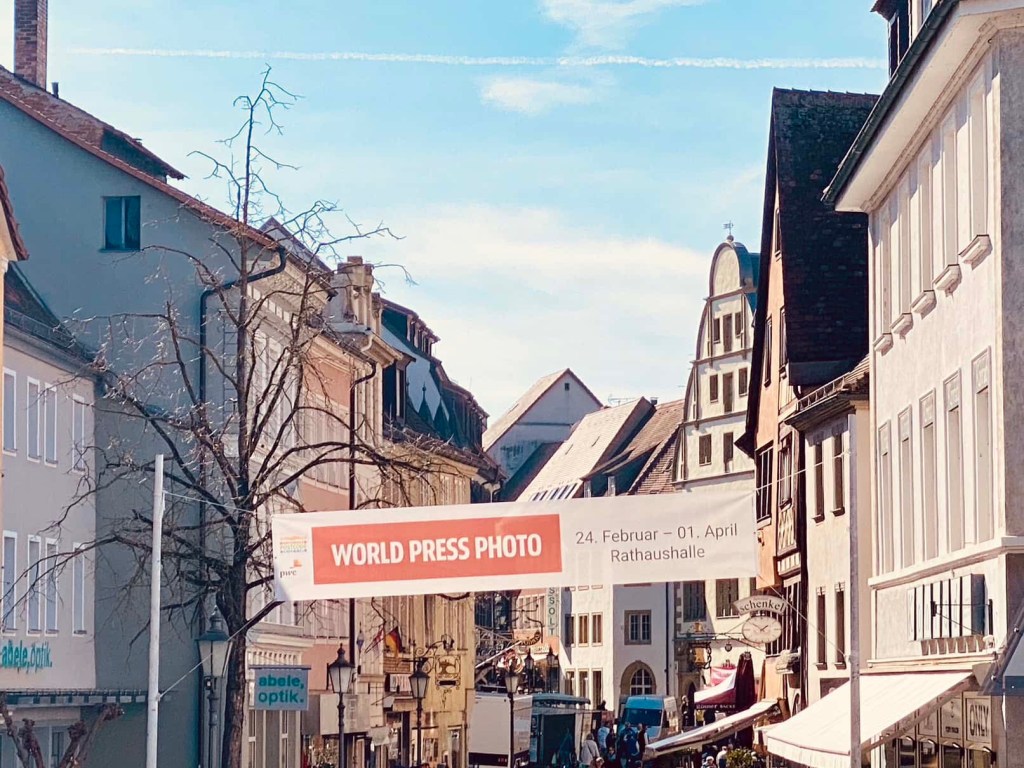
Wow! What an exhibition.
What happened in 2022?
Photojournalists working in 2022 brought stories of the war in Ukraine and life under Taliban rule in Afghanistan, of use and abuse of river water in Central Asia and the United States, flooding in Australia, oil spillage in Peru, and people with dementia in Ghana…
So much poverty, discrimination, no freedom and so many countries around the globe which are all affected by climate change. It’s tragic! It’s shocking! The good news: thanks to world press photo, we are being made aware! And it’s our choice to get hands on.
For everyone who won’t have the chance to go to the exhibition, I’m sharing a selection of the peoples stories. It’s a lot of words, but worth reading them!
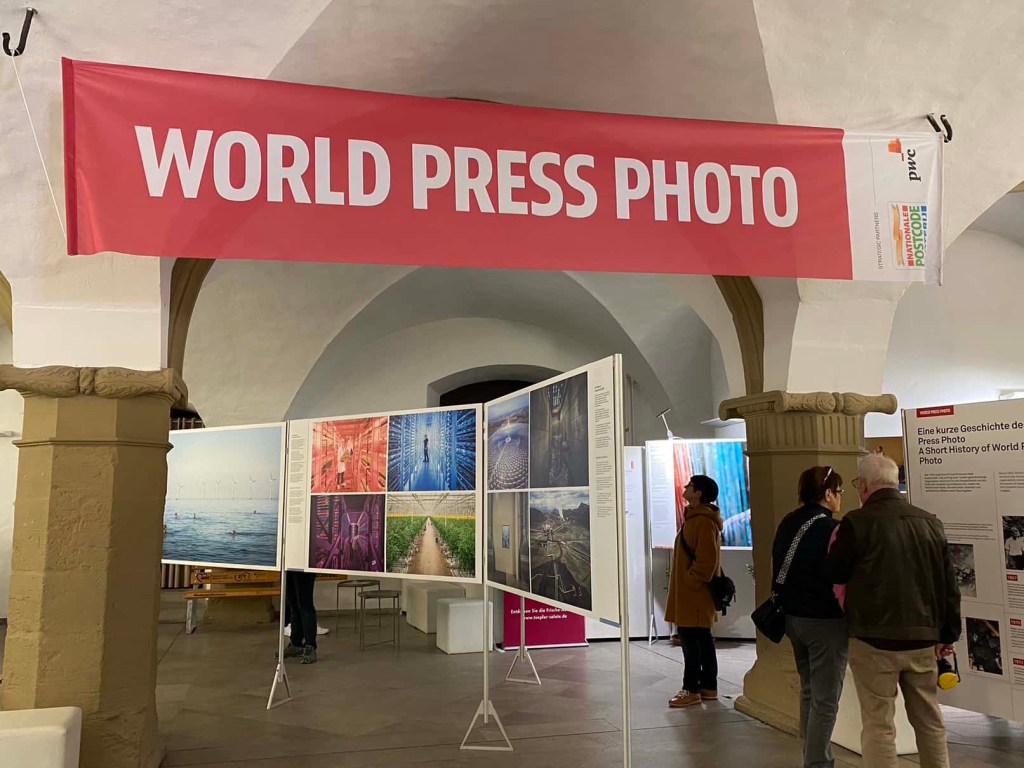
2023 World Press Photo Contest is representing major news events and important moments overlooked by the mainstream media in 2022, this exhibition brings together the most exceptional photographs and photographic stories submitted to the World Press Photo Contest. Drawn from more than 60,000 entries, the works on display were selected from six global regions – Africa, Asia, Europe, North and Central America, South America, and Southeast Asia and Oceania. The winning entries call attention to some of the most pressing issues facing the world today, from the devastating documentation of the war in Ukraine to intimate scenes of daily life in Mexico. To encourage greater understanding and awareness, as well as reinforce the need for press freedom, World Press Photo shares these important stories with audiences in all corners of the globe.
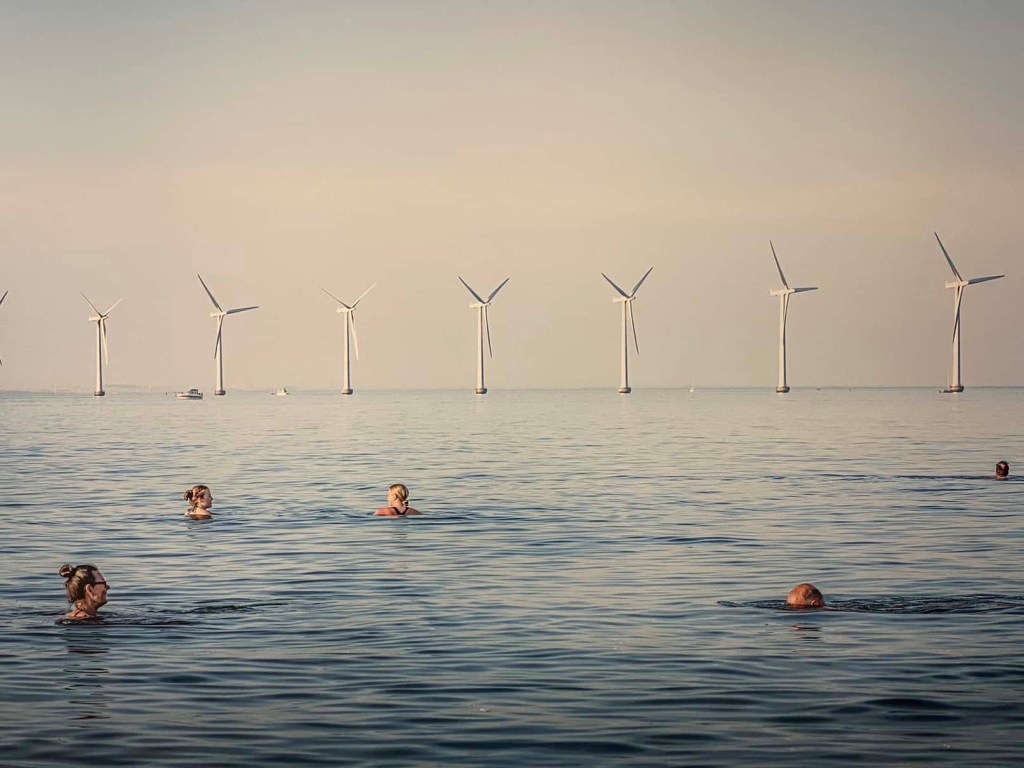
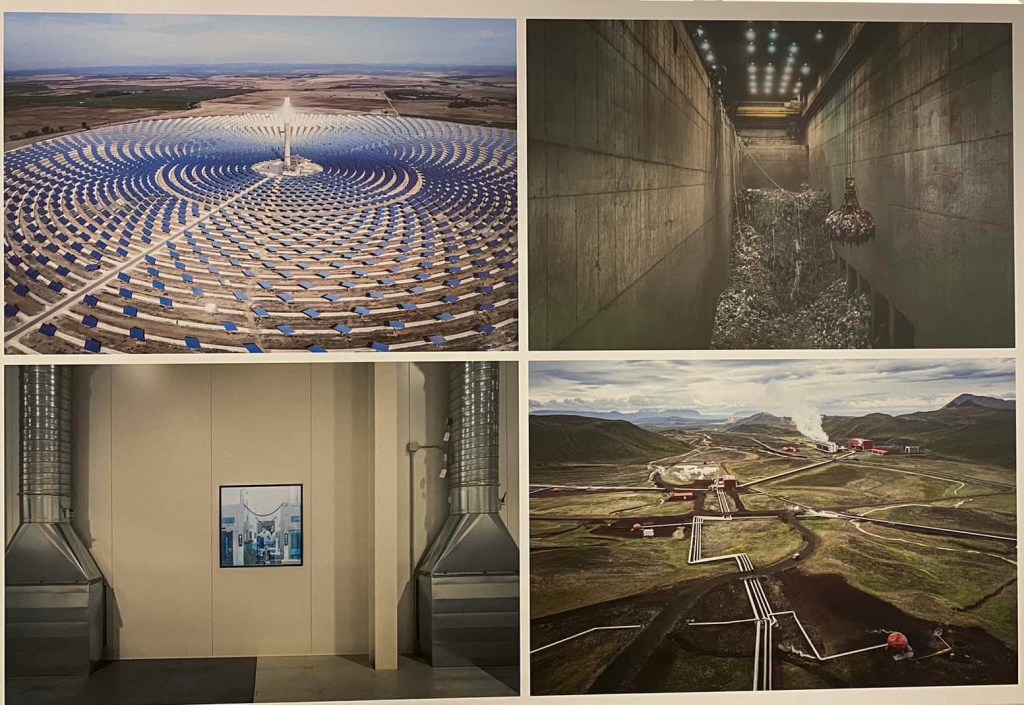
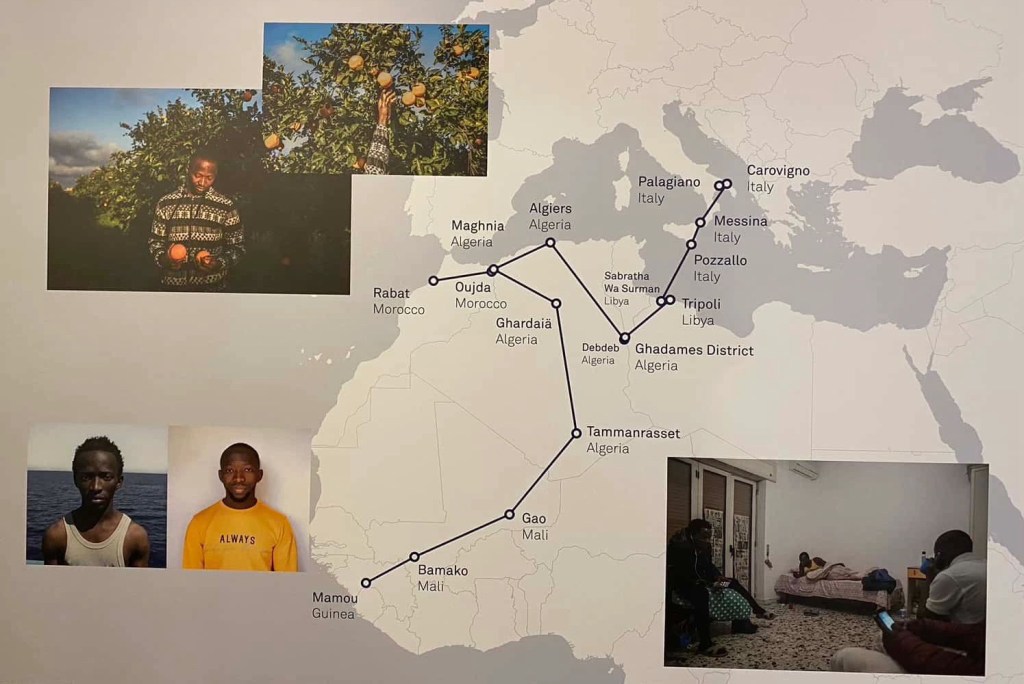
Since 2015, the influx of migrants, refugees, and asylum seekers from Africa to Europe has been covered in European news media as either a series of humanitarian crises or as a set of abstract statistics. On 1 August 2016, a boat carrying 118 people was found drifting off the coast of Libya, one of hundreds that required rescue in the past years. What happened to these individuals after their arrival in Europe?
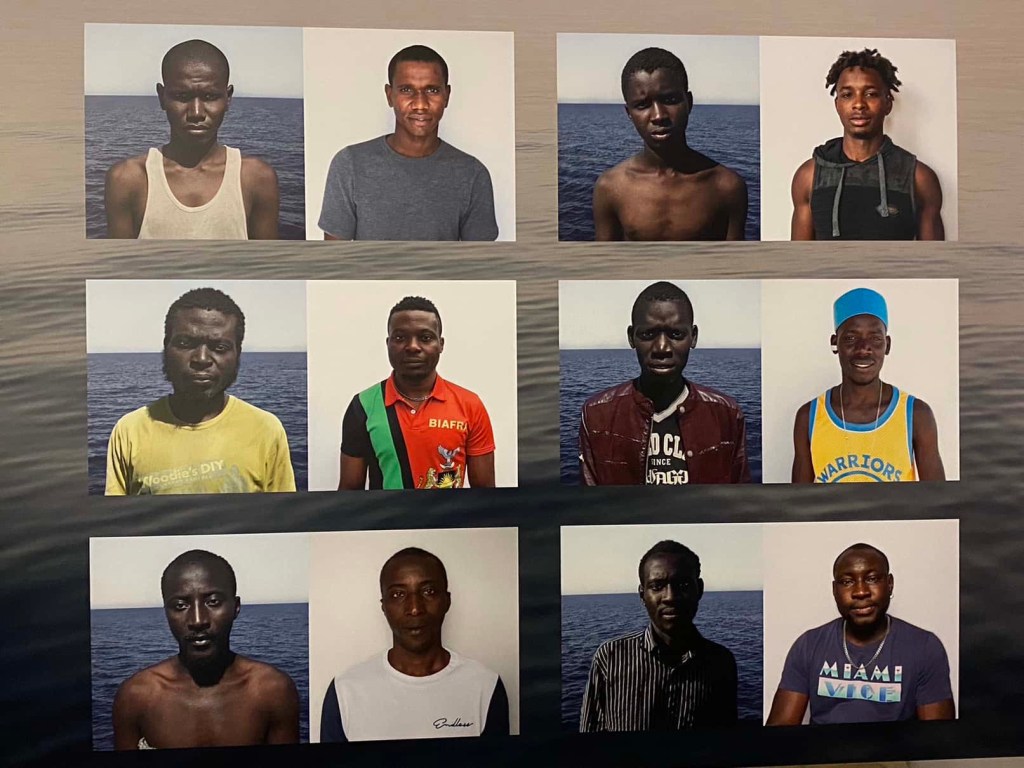
Abdul is from Senegal and at the time of publication resided in Spain.
Haruna is from Guinea and at the time of publication resided in Kiel, Germany.
Neboth is from Nigeria and at the time of publication resided in Matera, Italy.
Modou is from Senegal and at the time of publication resided in La Fuliola, Spain.
Mallow is from Guinea and at the time of publication resided in Seraing, Belgium.
Kaba is from Guinea and at the time of publication resided in Montauban, France.“
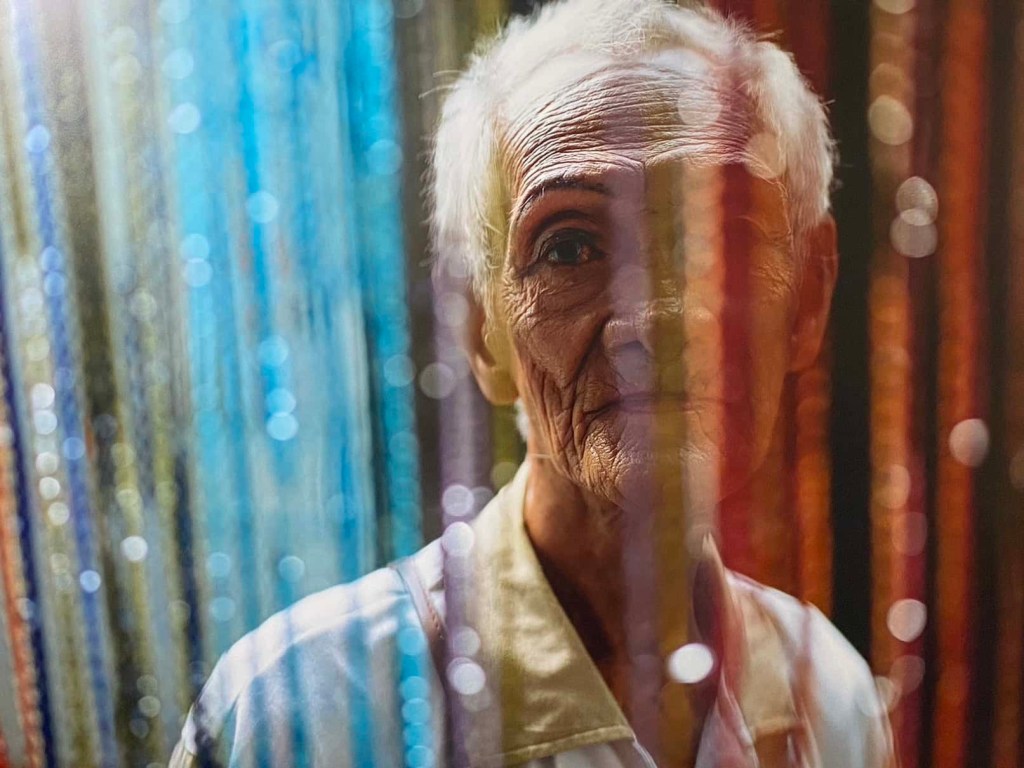
Al Enriquez (86) looks through a curtain in the the Golden Gays’ home in Manila, the Philippines, on 18 July 2022.
The Golden Gays are a community of older LGBTQl+ people from the Philippines who have lived together for decades and support each other. In a country where they face discrimination, prejudice, and challenges amplified by their age and socioeconomic class, the group came together and made a home, sharing care responsibilities and staging shows and pageants to make ends meet.“
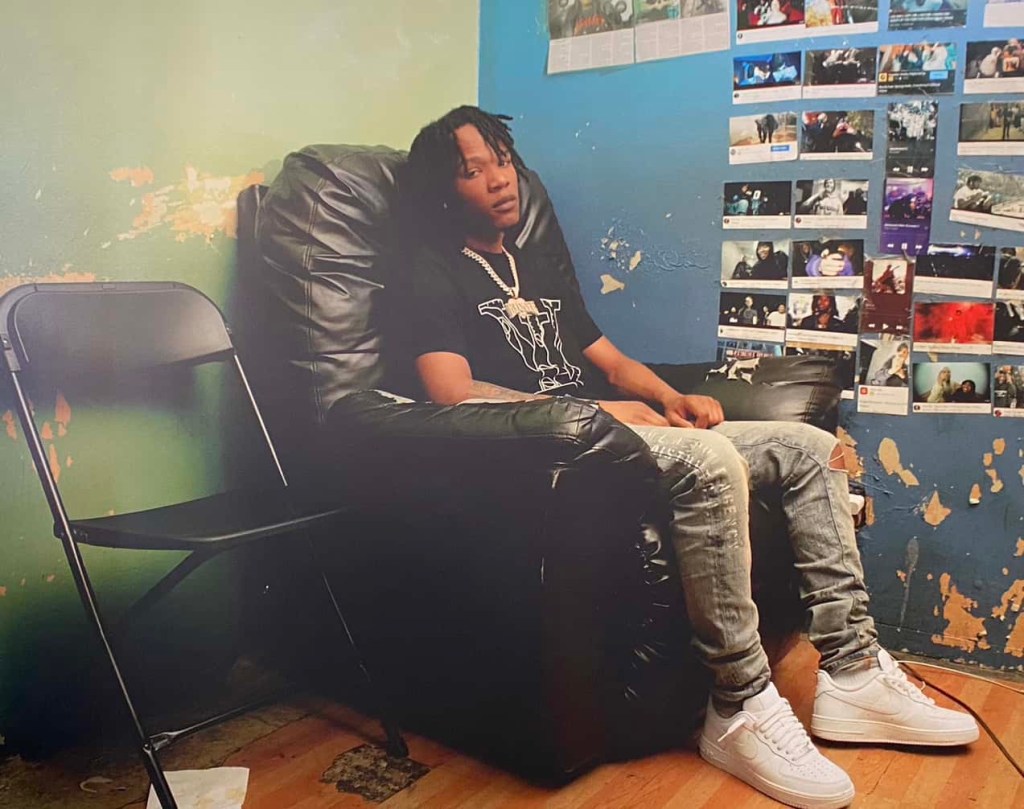
Drill:
B-Lovee (21) is a South Bronx native who has turned local renown into global success by going viral on video sharing platforms like TikTok. South Bronx, New York, United States, 11 July 2022.
Drill, a musical genre that originated in Chicago, United States, may be the most recent wave of rap music to achieve massive global success, but its story is not new to hip-hop. Even as their hit songs top charts, New York drill artists are targeted by New York City Police Department (NYPD) investigators who comb their lyrics and music videos for evidence of gang-related crimes.
Concerts are shut down and artists face indictments, all while success brings rivalry and jealousy among peers out on the streets. This series offers an intimate look at several members of this new generation of young men and women drill artists striving to realize their dreams.“
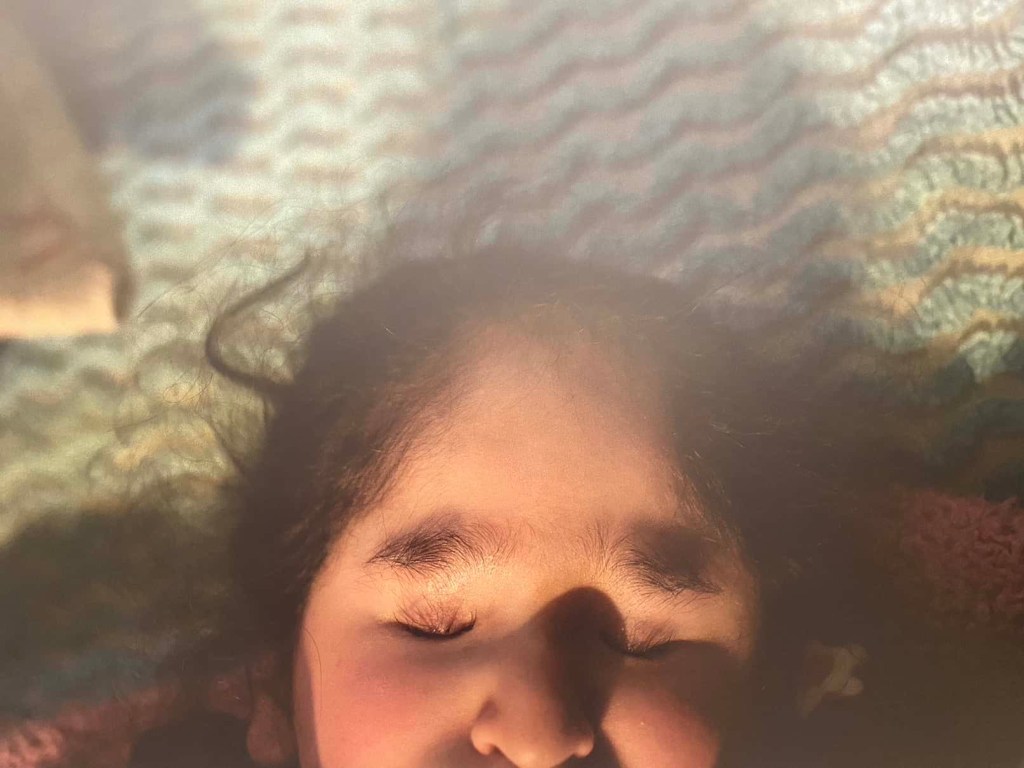
Carmelita (16) lies on her bed on 21
November 2021. Photosensitivity caused by encephalomalacia (softening of the brain tissue) gives Carmelita such pain that she cannot go out into the light.
The EU, China, the US, and other countries that have banned certain agrichemicals due to health and environmental risks still sometimes legally sell these substances to countries where labor is cheap and then import the products grown abroad.“
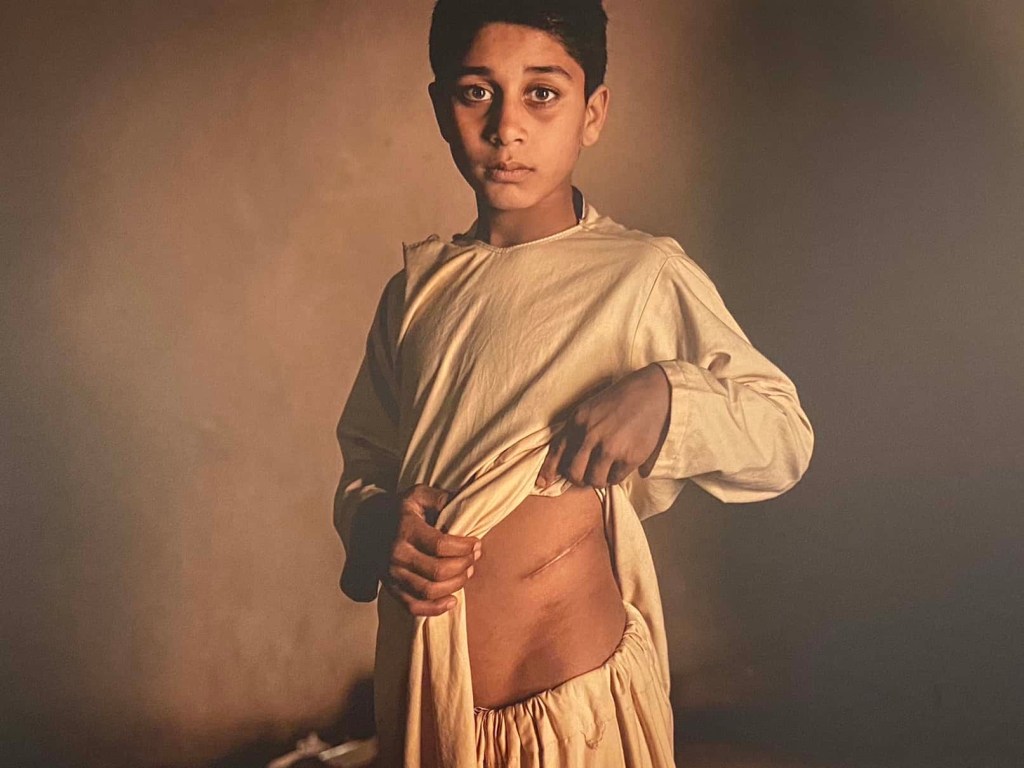
Afghanistan: Unable to afford food for the family, the parents of Khalil Ahmad (15) decided to sell his kidney for US$3,500.
The lack of jobs and the threat of starvation has led to a dramatic increase in the illegal organ trade.“
Seven million Venezuelans have left their country to live abroad, driven by economic collapse, political unrest, high unemployment, and extreme social inequality. Around the turn of the millennium, oil-rich Venezuela was prosperous, but its fortunes declined following plummeting oil prices, later economic mismanagement, and political instability.
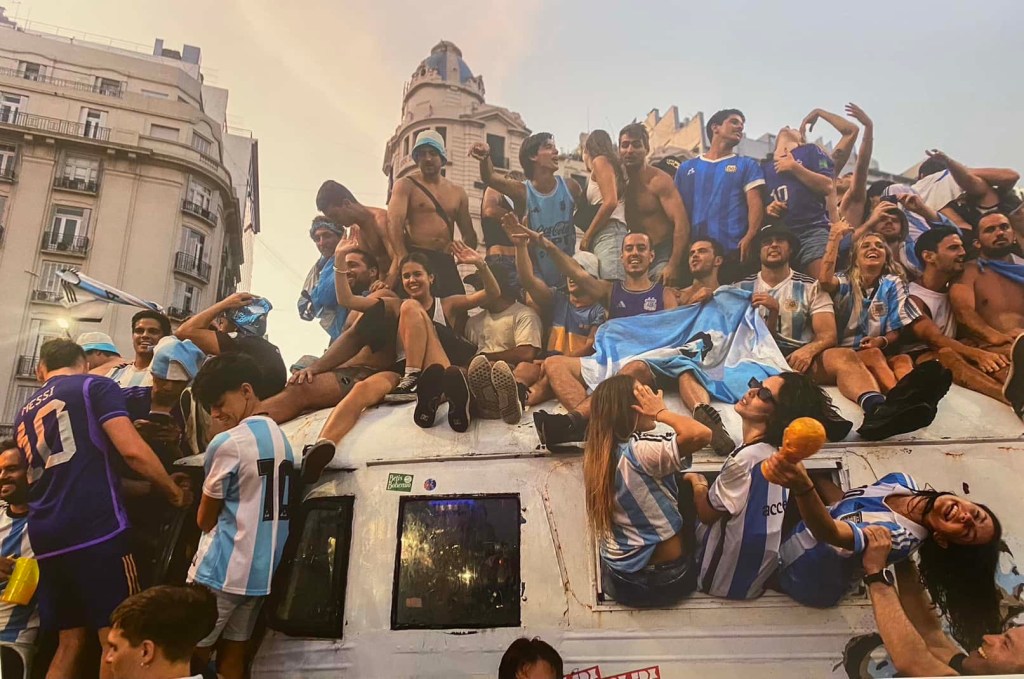
A scene of jubilation as Argentinians revel in their country’s return to football world dominance. Buenos Aires, 18
December 2022.“
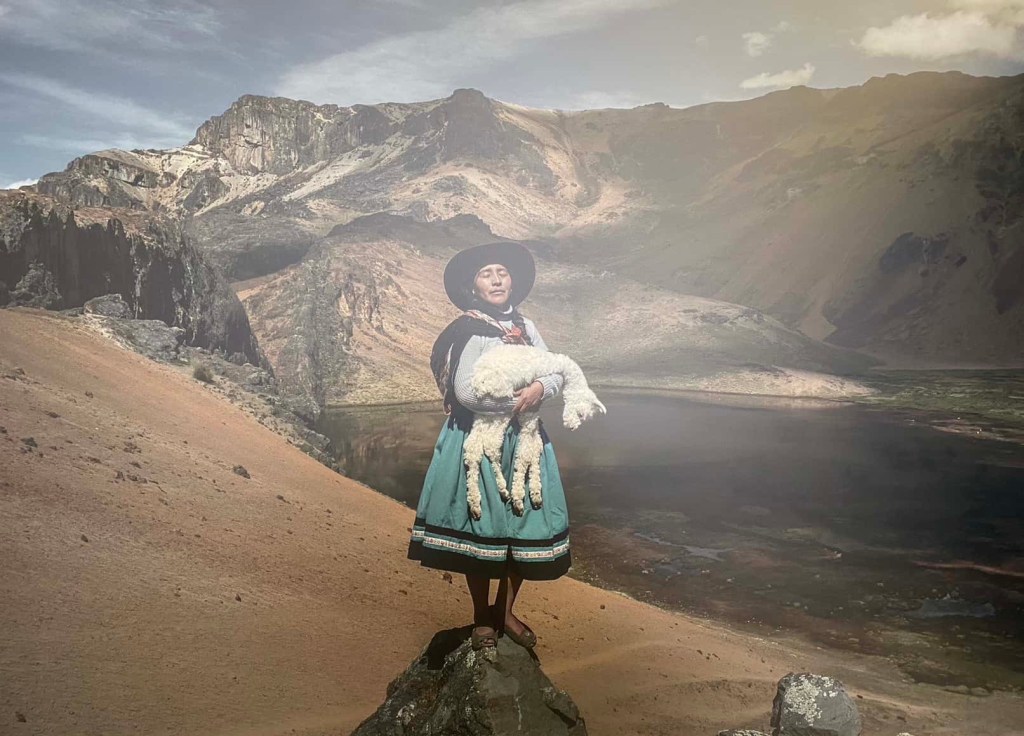
Alina Surquislla Gomez, a third-generation alpaquera, cradles a baby alpaca on the way to her family’s summer pastures, in Oropesa, Peru.
Vital to the livelihoods of many people in the Peruvian Andes, alpacas face new challenges due to the climate crisis. With natural pastures shrinking and glaciers retreating, these animals increasingly struggle to graze and hydrate. Alpaquero (alpaca-farmer) communities in turn may be forced to move to higher altitudes or to abandon their lifestyles. To combat these difficulties, scientists hope to address the problem by creating breeds more resistant to extremes in temperature. The jury appreciated the way the story illuminates how culture and identity are deeply intertwined with the environment.“
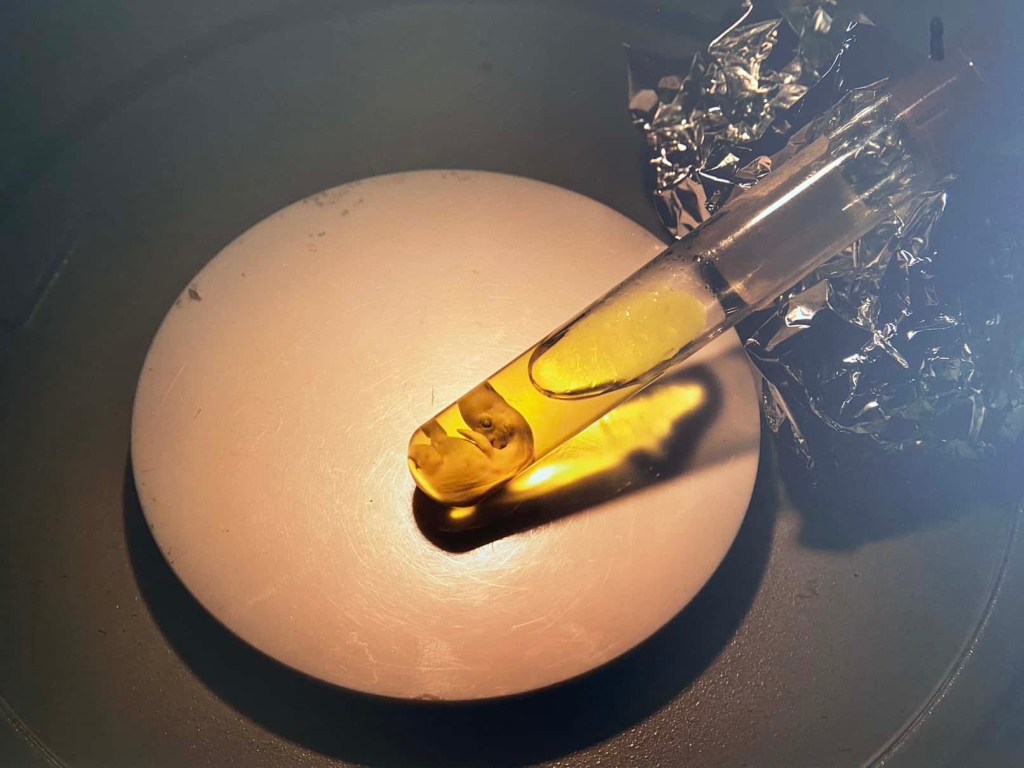
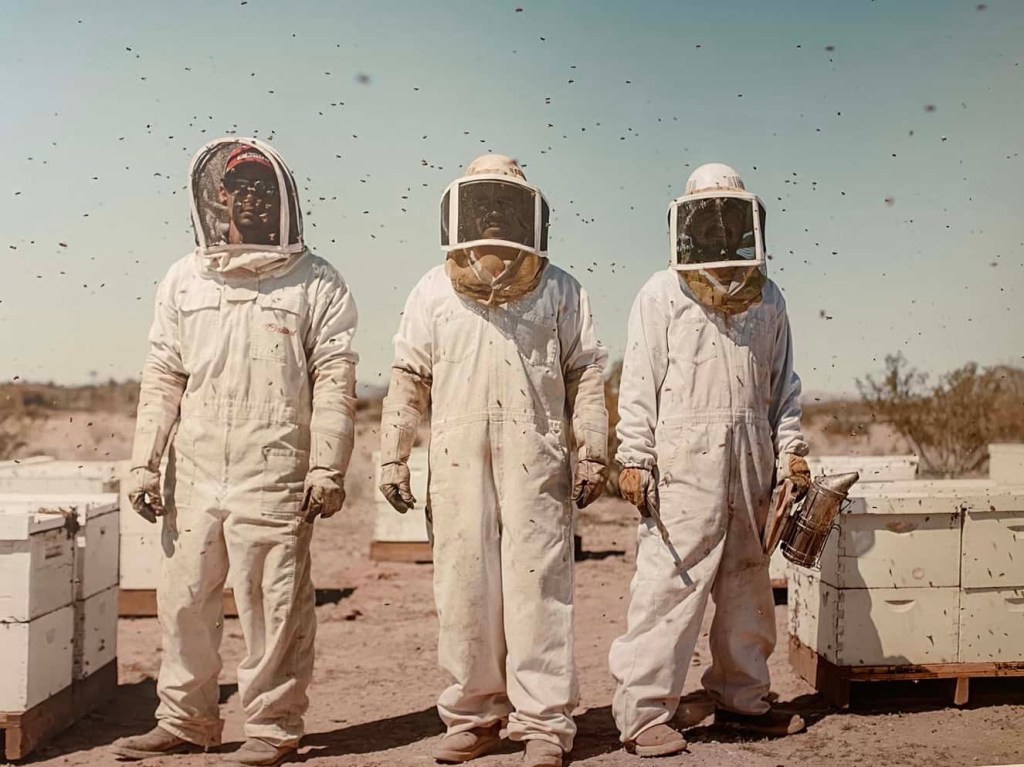
Alfredo, Ubaldo, and José tend beehives near Wenden in the Arizona desert, United States, on 11 March 2022. A substantial decrease in flow of the Colorado River, caused by lack of rain and increasing demand for water upstream, now requires these workers to provide water for the bees in troughs. Heat and drought weakens bees, making them more susceptible to pathogens and parasites, and impacts the plants from which they feed.
Between 2019 and 2020, colonies of bees – vital for pollinating crops – declined by 43.7 percent across the US. The jury felt this understated portrait invites reflection on an environmental issue that resonates at a global level.“
Massive protests in Iran began after the arrest and death of Mahsa “Jina” Amini, a 22-year-old Kurdish woman who was taken into custody by the Islamic Republic’s morality police for allegedly violating the country’s mandatory hijab law. Despite the violent attacks on protestors, the protests spread rapidly to regions across the country, encompassing all age groups and social classes. To demonstrate their opposition to the government, women in Iran have been going out in public without wearing a hijab, turning everyday life into an act of civil disobedience.
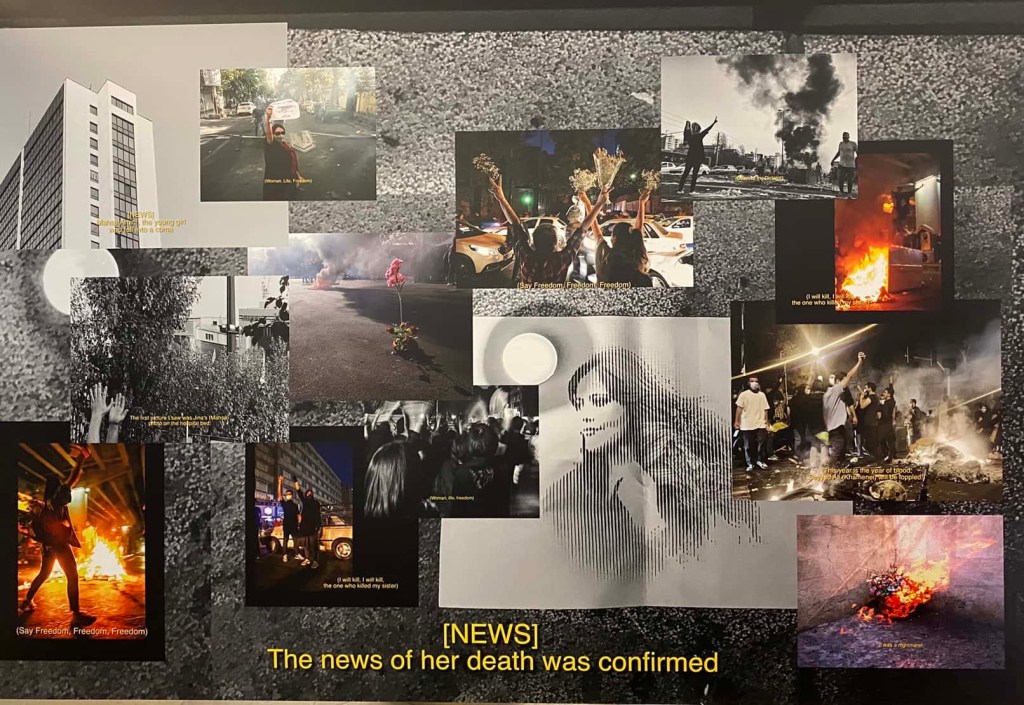
This photo-based video project narrates one chaotic night in the life of an Iranian nurse as she saves the life of a young protester named Reza. The footage offers a rare glimpse into the dangers faced by protestors on the streets of Iran today, situated in the context of an inciting incident: on 16 September 2022, Mahsa “Jina” Amini, a 22-year-old Kurdish woman, died after she was arrested by the Islamic Republic’s morality police for allegedly violating the country’s strict rules restricting the dress and conduct of women. The ensuing protests quickly intensified, spreading across the country. The Islamic Republic responded by disrupting internet access and violently repressing uprisings. Because hospitals are controlled by the regime, anyone injured in the protests risks arrest and further abuse upon seeking medical attention.“
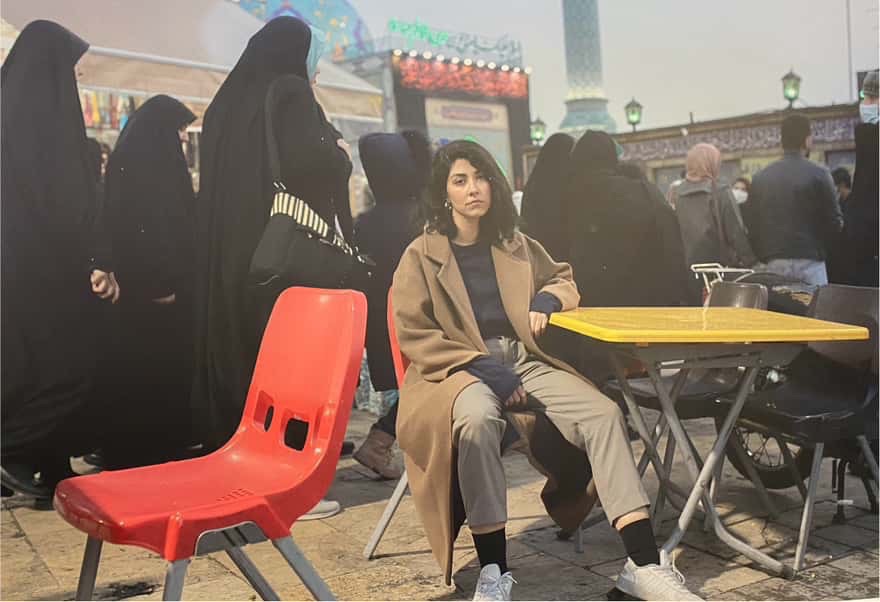
An Iranian woman sits on a chair in front of a busy square in Tehran, defying the mandatory hijab law, on 27 December
2022. “A few days after Mahsa’s death, I was walking past Keshavarzi Boulevard when I saw a massive crowd of men and women, young and old, chanting a slogan that I’ve never heard before: ‘Woman, Life, Freedom’. It enlightened me, it was moving,” she said.“
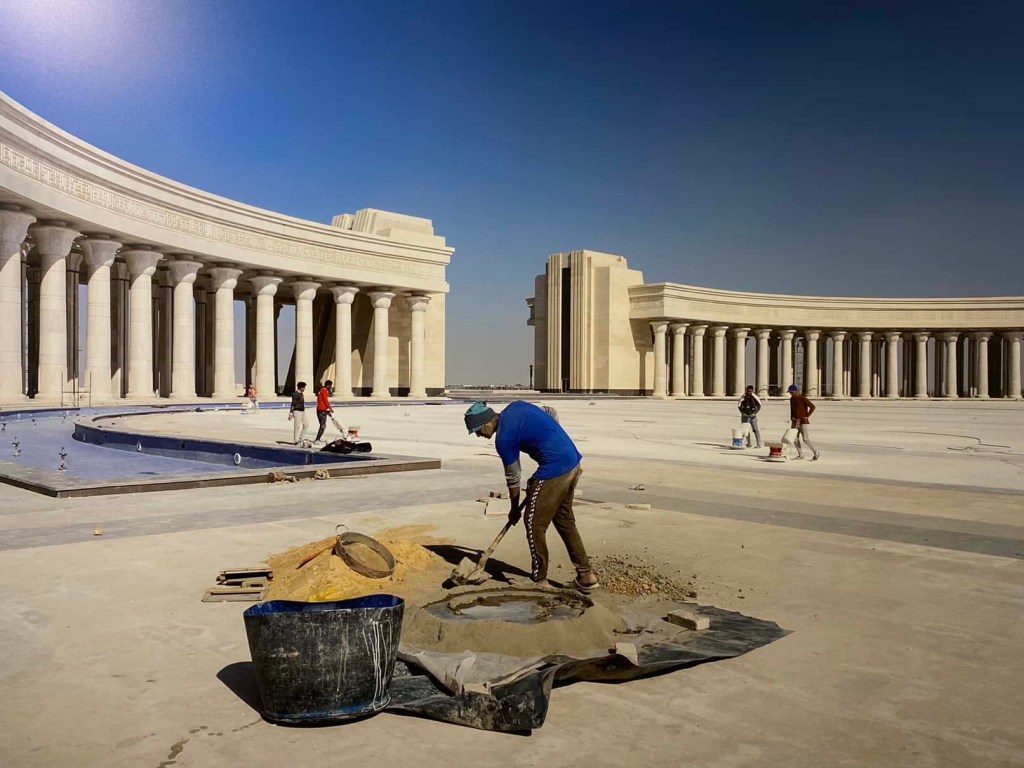
In 2015, the Egyptian government began constructing the NAC in the desert east of Cairo, Egypt, to accommodate ministries, top companies, and relieve chronic congestion and pollution in the city. Modeled on Dubai, this new urban environment will house 6.5 million people. Critics of the project argue that the NAC caters to the privileged minority and serves President Abdel Fattah el-Sissi’s efforts to consolidate power and establish a legacy.“
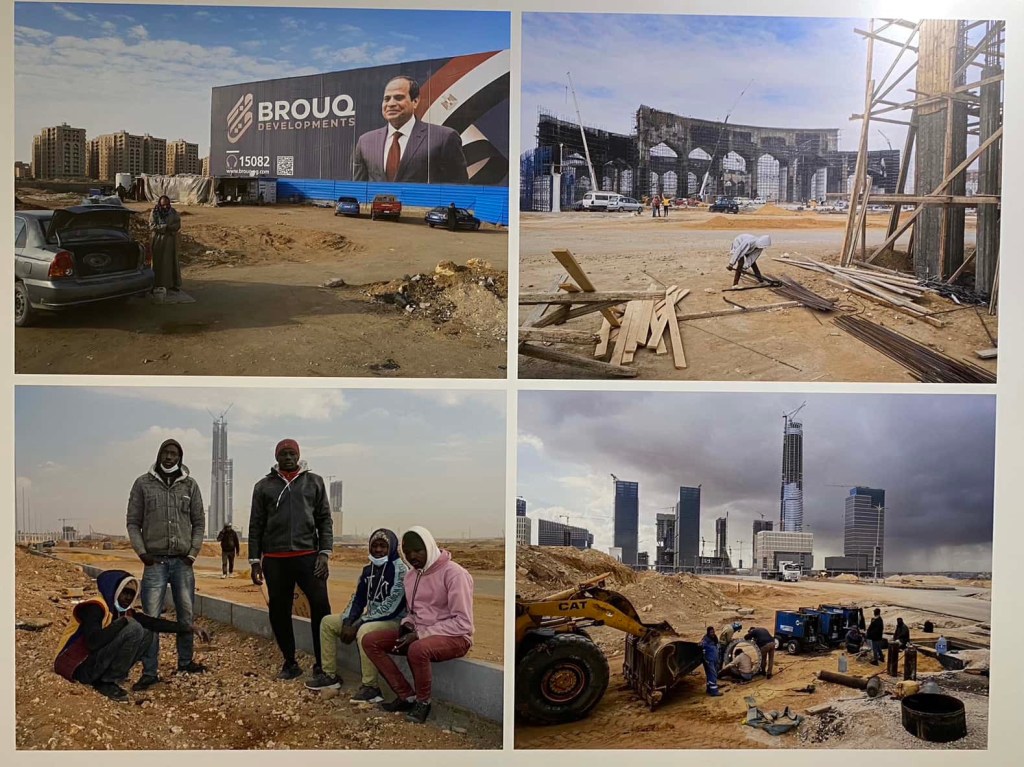
US$50,000.”
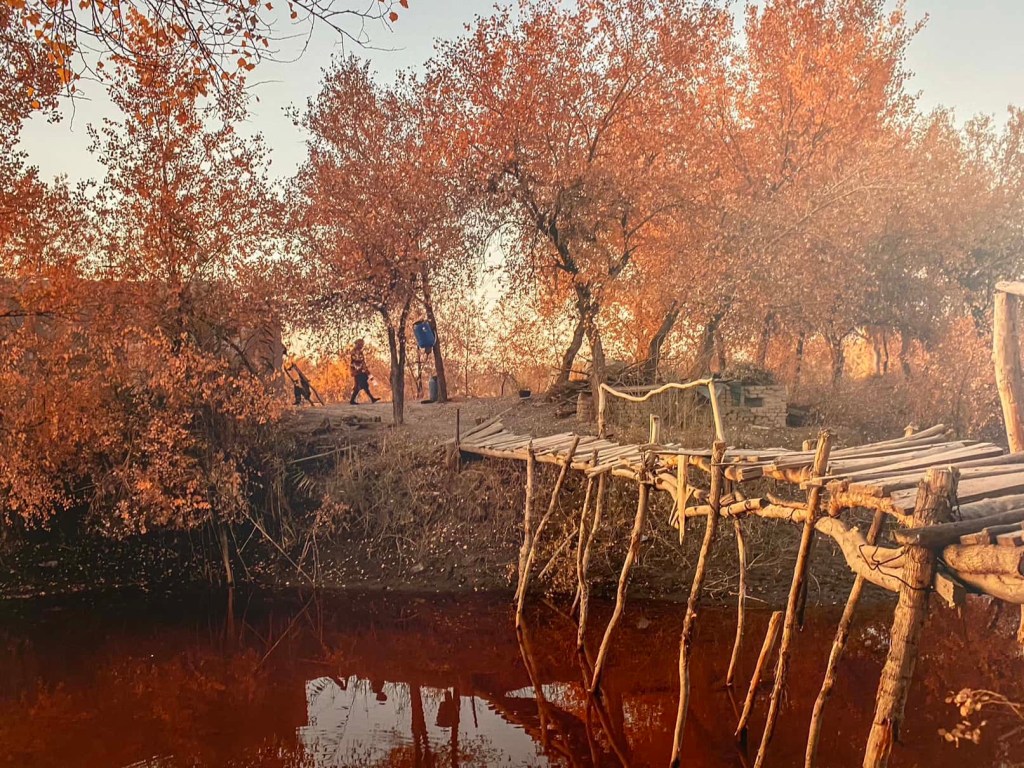
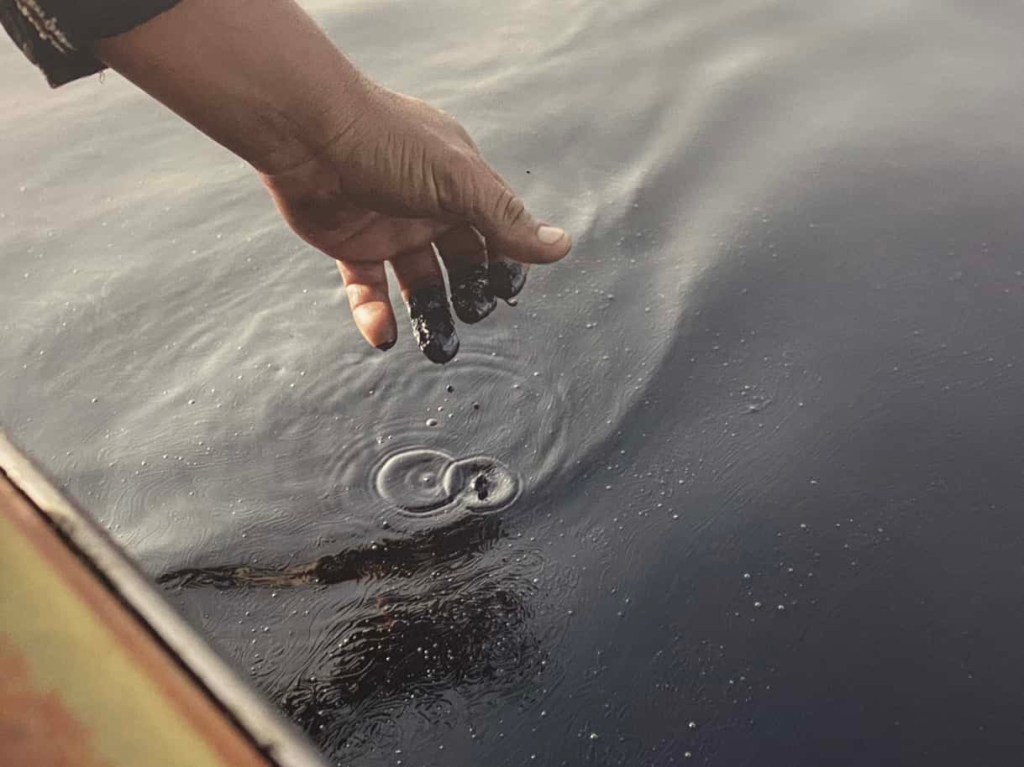
Silt in the Amu Darya in Uzbekistan gives the water a dark red color, as water levels in the river continue to decrease.
28 October 2019.
Four landlocked Central Asian countries are struggling with the climate crisis and lack of coordination over the water supplies they share. Tajikistan and Kyrgyzstan, upstream on the Syr Darya and Amu Darya rivers, need extra energy in winter. Downstream, Uzbekistan and Kazakhstan need water in summer for agriculture. Historically, the countries seasonally traded fossil-fuel energy for water released from upstream dams, but since the fall of the USSR and the rise of privatized industries, this system has become imbalanced. Unsustainable use of water and recent intense droughts compound the challenges.”
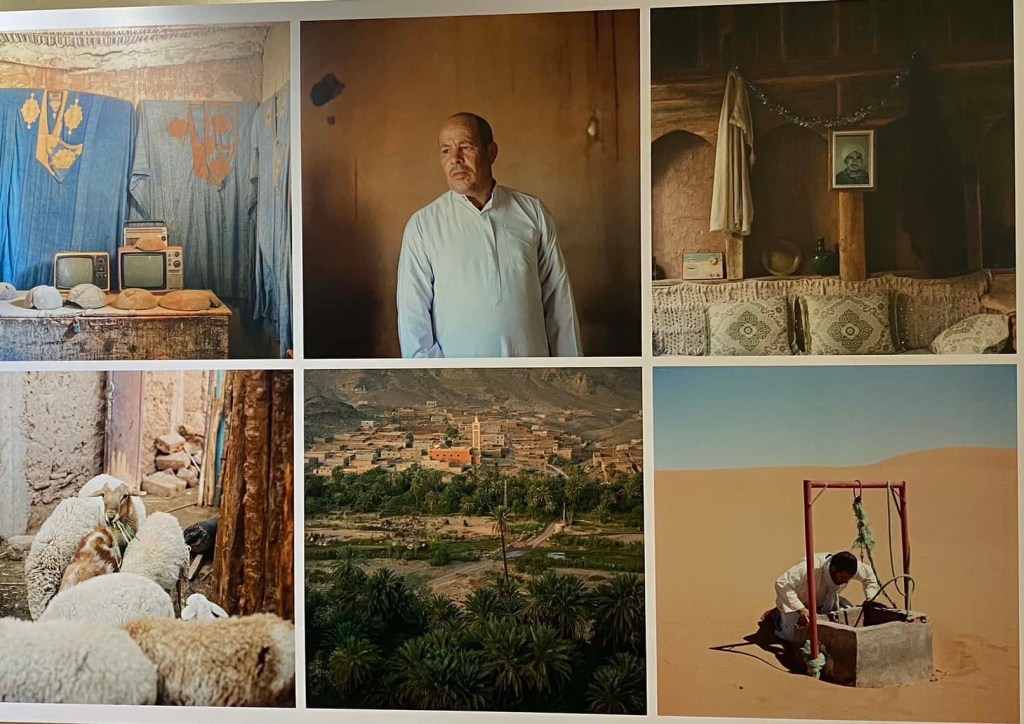
Roughly two-thirds of Morocco’s oasis habitat has disappeared in the past century due to such factors as steadily rising temperatures, fires, and water scarcity. Oasis degradation in turn impacts inhabitants, causing decreased agricultural production, poverty, and displacement.”
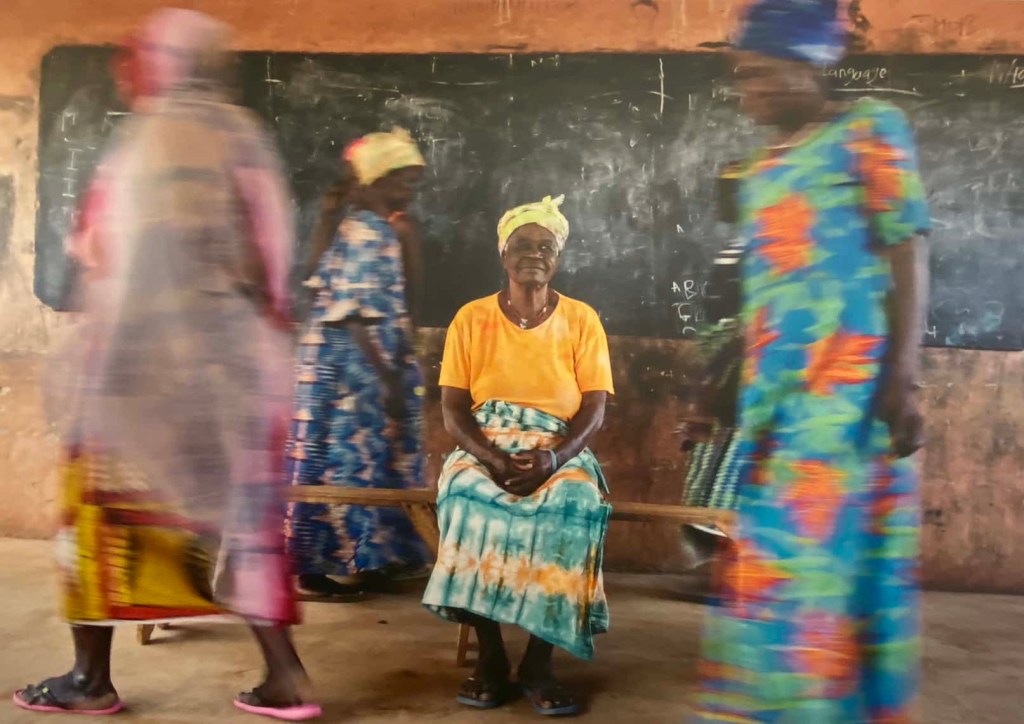
Sugri Zenabu, a mangazia (female community leader) of the Gambaga
“witch camp”, sits encircled by residents in Gambaga, Ghana, on 27 October 2022.
Zenabu shows some signs of confusion and memory loss associated with dementia.
As life expectancy rises, dementia is increasingly becoming a public health and socio-cultural issue in Ghana and across Africa. Lack of public awareness of behavior associated with the condition means that women displaying symptoms are sometimes perceived as witches. In Ghana, they may be sent away to live in so-called “witch camps”.”
Why Press Freedom Matters!
Freedom of the press cannot be taken for granted. The organization Reporters Without Borders (RSF) defines press freedom “as the ability of journalists as individuals and collectives to select, produce, and disseminate news in the public interest independent of political, economic, legal, and social interference and in the absence of threats to their physical and mental safety.” RSF estimates that nearly half of the world’s population has no access to freely reported news and information. By their count, more than 1,600 journalists have been killed in the past 20 years, at an average of 80 per year.
Thank you! 🌍

 Stuttgart547